
🐙 Introduction: A Surreal Ocean Spectacle
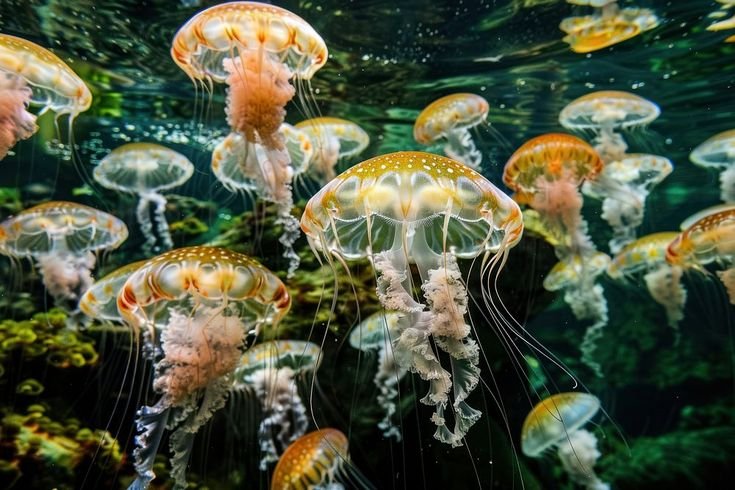
In a breathtaking and somewhat alarming display of marine life, scientists have documented the largest jellyfish bloom in over 50 years along several coastal regions. Stretching for miles across the surface of the sea, this shimmering mass of pulsating jellyfish has drawn the attention of researchers, fishermen, and tourists alike. While the sight is mesmerizing—a glowing dance of gelatinous creatures beneath the waves—it also raises serious environmental concerns. Experts warn that this massive bloom could be a symptom of deeper issues in the ocean’s delicate ecological balance, driven by climate change, overfishing, and pollution.
🌡️ A Rare Natural Phenomenon or a Warning Sign?
Jellyfish blooms are not uncommon, but what makes this event extraordinary is its unprecedented scale and duration. Marine biologists have recorded billions of jellyfish—ranging from small moon jellies to massive lion’s mane varieties—spanning hundreds of kilometers along the coastline.
Dr. Laura Kim, a marine ecologist from the Global Oceanic Institute, described the event as “both beautiful and deeply concerning.” She noted that while jellyfish populations naturally fluctuate, the sheer magnitude of this bloom suggests “something significant is happening within the marine environment.”
Scientists believe the combination of rising sea temperatures, nutrient pollution, and declining fish populations has created the perfect breeding conditions for jellyfish to thrive. Warmer waters accelerate jellyfish reproduction cycles, while the loss of natural predators such as turtles and certain fish species allows their numbers to explode unchecked.
🐠 How Climate Change Fuels Jellyfish Blooms
Over the last few decades, the ocean has absorbed more than 90% of the Earth’s excess heat caused by greenhouse gas emissions. This warming trend is dramatically altering marine ecosystems, and jellyfish appear to be among the few species benefiting from it.
Warmer waters not only expand jellyfish habitats but also reduce oxygen levels, creating “dead zones” where many fish cannot survive—but jellyfish can. Their ability to withstand low-oxygen environments gives them a competitive advantage, allowing them to dominate areas where other marine species have declined.
Additionally, changing ocean currents and melting polar ice caps are influencing jellyfish migration patterns, bringing them into new territories where they were once rare. These shifts could have long-term consequences for fisheries, tourism, and coastal ecosystems worldwide.
🐢 Impact on Marine Life and Human Activities
While the sight of a massive jellyfish bloom might seem harmless—or even mesmerizing—the effects on local ecosystems and human industries can be devastating.
Fishermen have reported damaged nets, clogged engines, and disrupted fish catches, as the jellyfish swarm through coastal waters in overwhelming numbers. In some areas, entire fishing operations have been forced to shut down temporarily due to the density of the jellyfish blocking equipment.
For marine life, the problem is equally severe. Jellyfish compete with fish larvae for plankton, the base of the ocean food chain. In large numbers, they can consume vast amounts of plankton, starving other species and further destabilizing the ecosystem.
Sea turtles—one of the few natural predators of jellyfish—are struggling to keep up, as pollution, poaching, and habitat loss have sharply reduced their populations. Without enough turtles and other predators to maintain balance, jellyfish populations can spiral out of control.
⚓ Coastal Communities Feeling the Effects
Beyond the ecological impact, coastal communities are also grappling with the consequences of the bloom. Beaches that were once tourist hotspots are now lined with washed-up jellyfish, forcing temporary closures and reducing tourism revenue.
Lifeguards have issued warnings about potential stings, particularly from species like the Portuguese man o’ war and the lion’s mane jellyfish, whose tentacles can deliver painful—sometimes dangerous—stings to swimmers.
Local governments are struggling to manage cleanup efforts and warn the public about safety risks, while marine research teams rush to collect data before the bloom dissipates. For many coastal towns that depend on summer tourism, this event serves as a stark reminder of how environmental imbalances can affect human economies as much as natural ecosystems.
🧬 Scientists Race to Understand the Bloom
To study the phenomenon, marine research vessels equipped with drones and underwater cameras have been deployed along affected coasts. Their goal is to map the bloom’s extent, identify the jellyfish species involved, and analyze the environmental conditions fueling their growth.
Preliminary data shows unusually high concentrations of nutrients—particularly nitrogen and phosphorus—in the water. These nutrients often originate from agricultural runoff, sewage discharge, and industrial waste, which fertilize plankton populations that jellyfish feed on.
As Dr. Kim explains, “This isn’t just a jellyfish problem—it’s a symptom of what happens when we overload the ocean with nutrients and alter its chemistry.” Scientists hope that understanding this bloom will shed light on how human activity is accelerating such events and how they might be prevented in the future.
🪸 The Delicate Balance of Marine Ecosystems
The explosion in jellyfish numbers is a vivid illustration of how quickly ecosystems can shift when key species are removed or environmental conditions change. Once a stable ecosystem becomes dominated by jellyfish, it can be extremely difficult to reverse the process.
Known as a “jellyfish regime shift,” this transformation can turn once-productive fishing grounds into gelatinous wastelands. When jellyfish dominate, biodiversity plummets, carbon cycles change, and the ability of the ocean to support complex life declines dramatically.
Such changes highlight the importance of sustainable fishing practices, reducing pollution, and addressing climate change before these blooms become the new normal.
🌍 Global Patterns of Jellyfish Expansion
The current bloom isn’t an isolated event. Around the world, scientists have observed similar surges in jellyfish populations. From the Mediterranean to Japan’s coastlines, massive blooms have been linked to warming seas, overfishing, and nutrient pollution.
In Japan, for instance, the Nomura’s jellyfish, which can grow up to two meters in diameter, has wreaked havoc on fisheries for years. In the Black Sea, overfishing of anchovies once allowed jellyfish to take over, collapsing the regional fishing industry for more than a decade.
These global trends suggest that unless meaningful action is taken, jellyfish dominance could become a defining feature of future oceans, replacing fish-dominated ecosystems with simpler, less productive ones.
🌊 What Can Be Done?
Combating jellyfish blooms requires multi-level cooperation between scientists, governments, and communities. Some measures include:
- Reducing nutrient runoff: Implementing better waste management and sustainable agriculture can limit the amount of fertilizer and sewage entering oceans.
- Protecting predators: Conserving sea turtles and fish that feed on jellyfish can help restore natural population control.
- Monitoring ocean health: Investing in satellite tracking and marine observation can help detect and manage blooms before they grow out of control.
- Addressing climate change: The root cause—rising ocean temperatures—must be tackled through global emissions reductions and renewable energy initiatives.
Without decisive action, experts warn, such blooms could become annual occurrences, reshaping coastal economies and marine biodiversity forever.
🌅 A Mesmerizing Yet Ominous Sight
As drones capture breathtaking footage of the glowing, otherworldly bloom, it’s easy to be enchanted by the beauty of these gelatinous drifters. But beneath that beauty lies a sobering message about the state of our oceans.
The largest jellyfish bloom in half a century is not merely a natural wonder—it is a warning. It tells us that our planet’s most vital life support system is under strain, and that the balance between human activity and marine life is teetering on the edge.
If we heed the warning, this spectacle could inspire meaningful change and ocean conservation efforts worldwide. If ignored, it could mark yet another step toward a future where the seas we once knew are forever transformed.
🌍 Conclusion: Learning from the Bloom
The massive jellyfish bloom serves as a mirror reflecting our impact on the planet. It challenges us to rethink how we treat the oceans—not as infinite resources, but as living systems that respond to our actions.
Through better environmental management, global cooperation, and respect for marine life, we can restore balance to the ocean and ensure that future generations inherit a world where the wonders of the sea remain symbols of life, not warnings of decay.